

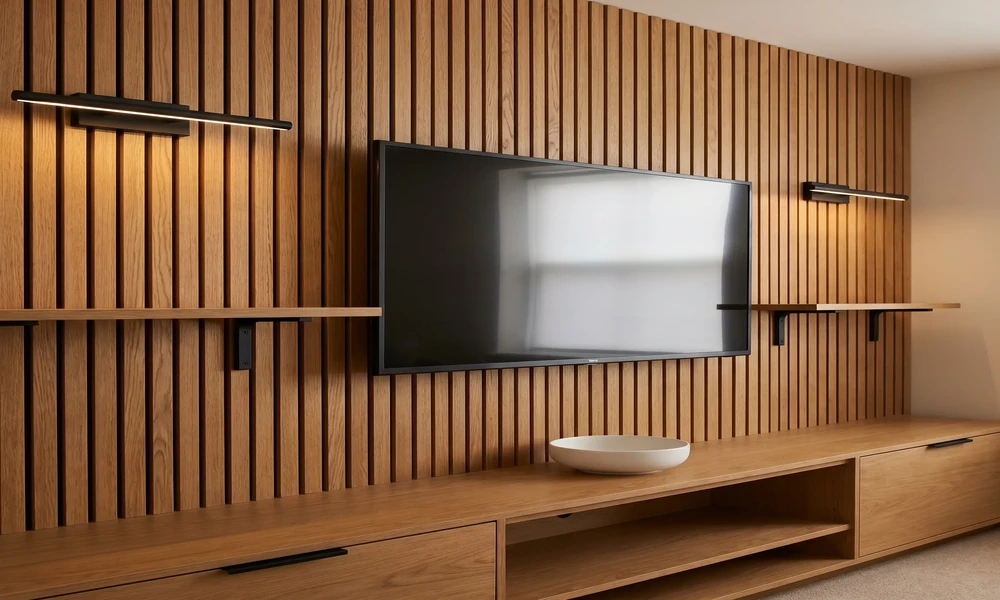
Vertical veneer wall panels can give a new identity to plain walls courtesy of the beauty of the wood grain as well as carefully selected designs and details. The combination of metallic channels and shadow lines adds contrast while retaining the warmth of wood. This combination is very good for modern interiors, being widely used in living rooms and bedrooms, hallways, and commercial premises where finishes are responsible for the design of the space.
Simple brass details, black gaps, as well as shades of veneer contribute to the visual appeal of the wall without embellishing it with complex decorations. It is essential to maintain the proportions of the materials used, the spacing as well as the finishes, creating a visually pleasing combination.
The Appeal of Metallic Groove Veneer Panelling
Metallic groove veneer panelling combines natural wood with narrow metallic elements, providing the required rhythmic effect of a wall. The channels may vary in shape. They can either occur vertically in between different veneer panels or frame the chosen fragment of the wall, as well as give rise to graphics that work with the architecture of the room.
The straight lines of metal are mainly used in minimalist designs, while bigger accents will create a stronger decorative effect. The space between the lines is also to be considered: the proportion of closely placed lines creates more detailed surfaces, while wider elements allow more of the wood texture to remain visible. It is especially significant when the panels cover a large wall area.
Brass Inserts for Warm, Refined Interiors
The use of a brass insert wood wall panel allows warm metallic accents that perfectly match walnut, oak, and other wood finishes. Brushed brass can bring understated elegance without causing too much shine, which makes it appropriate for the design of feature walls in the living room, headboards in the bedroom,m and the panelling of the entrance.
In the living room, brass inserts will be in harmony with the designs of pendants, furniture legs, and decorative fittings. In the bedroom, thin metal lines can draw the borders between the accent wall of the headboard and the overall design while keeping the concept of the interior understated. Brass looks stunning in combination with dark timber, and it creates a modern and light look with the use of a veneer.
Brass, in terms of colour and shine, forms a coherent design language with other metals used in the room.
Black Shadow Lines for Contemporary Wall Panels
In contrast to the metallic inserts, shadow lines add definition by creating narrow recessed lines between the joined panels. Being dark, they separate the surfaces, creating an architectural effect.
The use of black veneer sheet is particularly well-suited for modern living rooms, TV walls and offices. Repeated vertical lines can add height to the ceiling while equal distances create rhythm. Black shadow lines contrast well with warm timber shades, allowing the wood grain to remain visible without competing with decorative elements.
The width and depth of the recess should be considered properly. Thin gaps can contribute to a subtle, continuous appearance, while wider gaps create a more pronounced graphic effect. The final proportions must fit the measurements of the wall and the furniture placed around it.
Coordinating Veneer Colours, Grain and Finishes
The success of a wall panel design depends on how well the materials work together. Walnut and smoked oak go well with brass details, while lighter oak and ash finishes complement black shadow lines. Brushed metal usually gives a softer finishing effect than highly reflective materials. However, the way materials appear depends on how well they are illuminated.
Below are some of the combinations that you may consider while designing a feature wall:
- Walnut with brass: This makes for a neat, elegant appearance.
- Light oak with black gaps: This can provide a clear contrast that works well with a minimalist approach.
- Smoked wood with brushed metal: This adds depth to modern interiors.
- Neutral veneer with subtle metallic accents: Adds texture to veneer without overpowering the design.
Examining physical samples under the light of the room can help to understand how well the veneer colour and metallic surface match.
Planning Installation and Architectural Details
A luxury architectural veneer wall needs precise measurements, appropriate substrates and perfectly aligned panels. The metallic channels have to comply with the planned arrangement, while the shadow lines ought to be consistently spaced and detailed. Straight edges and correctly placed joints will help minimise visual inconsistencies.
Electricity, lighting and wall accessories have to be considered before installation. Concealed LEDs are a great option for illuminating the veneer and metallic accents but require proper placement in order to avoid unwanted reflections and shadows. The veneer, the method of installation and the type of coating must be appropriate for the purpose and location.
Maintaining the Finished Wall
Regular care is necessary for both veneer and metallic accents. Dust may be eliminated easily with the help of a soft microfibre cloth, while cleaning products should follow the instructions provided by the manufacturer of the coating. Avoid abrasive objects and harmful chemicals, as they can damage the veneer.
Pay attention to the joints and edges of the panels from time to time so that you can identify any issues that need attention.
Conclusion
Metallic channels and shadow lines are excellent options for enhancing vertical veneer wall panels. Brass inserts introduce warmth, while black shadow lines emphasise geometry and create a more contemporary appearance. With coordinated colours, consistent spacing, and careful installation, these details can bring architectural character to an interior without excessive decoration.
